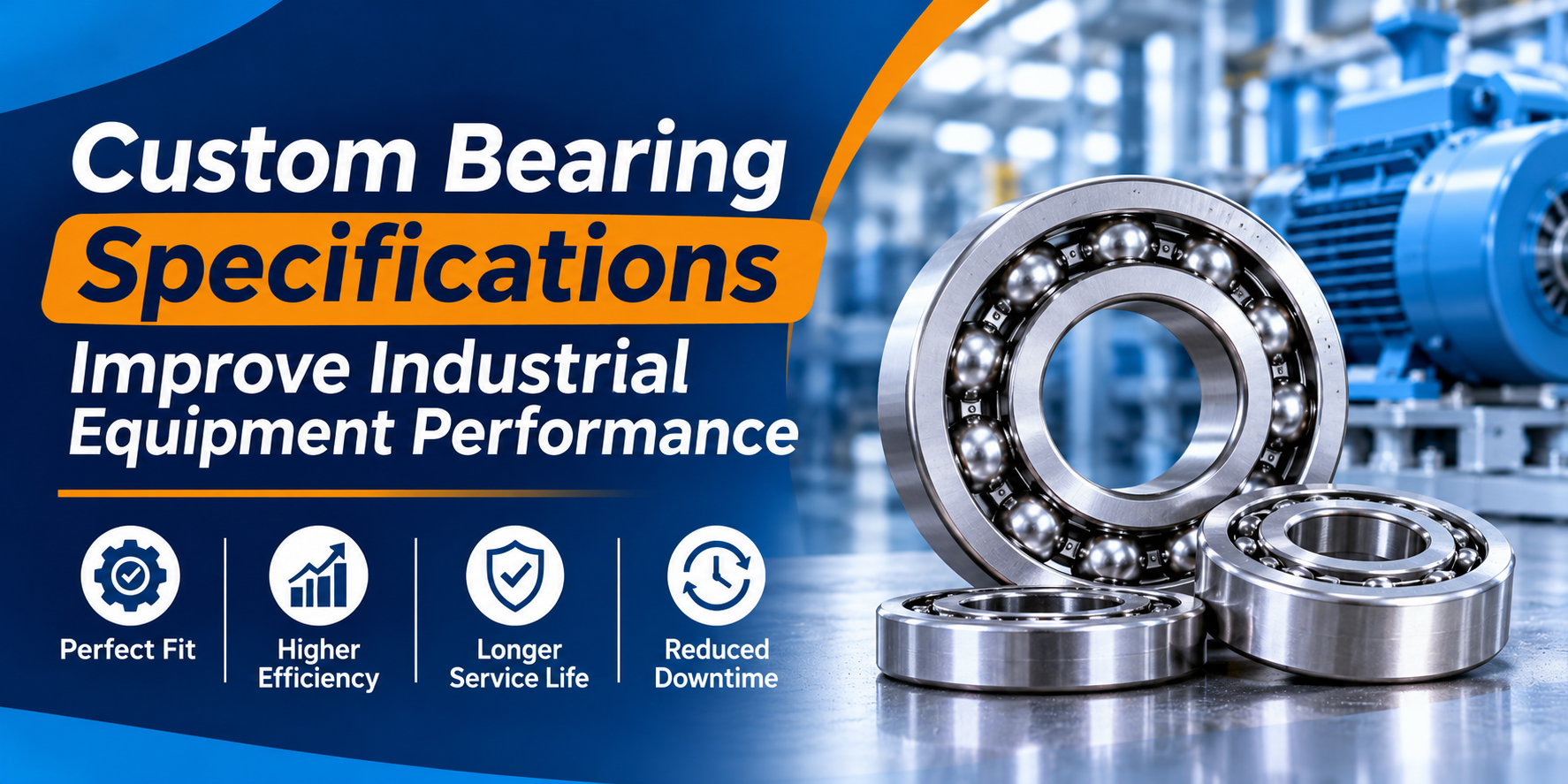
Industrial equipment is designed to operate under specific conditions, including different load capacities, operating speeds, temperatures, vibration levels, and environmental challenges. While standard bearings are suitable for many applications, certain machines require more specific bearing configurations to achieve the desired performance.
Custom bearing specifications help manufacturers and OEMs select bearing solutions that match their equipment design and operating requirements. By considering factors such as dimensions, materials, internal clearance, sealing arrangements, and load capacity, businesses can improve equipment compatibility and operational reliability.
What Are Custom Bearing Specifications?
Custom bearing specifications refer to technical requirements tailored to a particular machine or industrial application. Instead of selecting a bearing only from standard catalogue dimensions, engineers identify the features needed to suit the equipment’s design and operating environment.
These specifications may include:
- Inner and outer diameter
- Bearing width and dimensional tolerances
- Material selection
- Load capacity and operating speed
- Internal clearance and precision class
- Seal and shield arrangements
- Cage material and design
- Lubrication requirements
- Special operating temperature requirements
The final specification depends on the machinery design, shaft arrangement, housing dimensions, and operating conditions.
1. Improved Equipment Compatibility
One of the main advantages of custom bearing specifications is better compatibility with industrial machinery. Equipment manufacturers often work with specific shaft sizes, housing dimensions, and mounting arrangements.
A bearing with unsuitable dimensions or tolerances may create installation difficulties or affect machine operation. Custom dimensional requirements help ensure that the bearing fits the intended assembly and works with the surrounding components.
This is particularly important for OEMs developing specialised machinery or equipment with unique design requirements.
2. Better Load Handling
Different industrial machines experience different types of loads. Some applications involve primarily radial loads, while others require support for axial or combined loads.
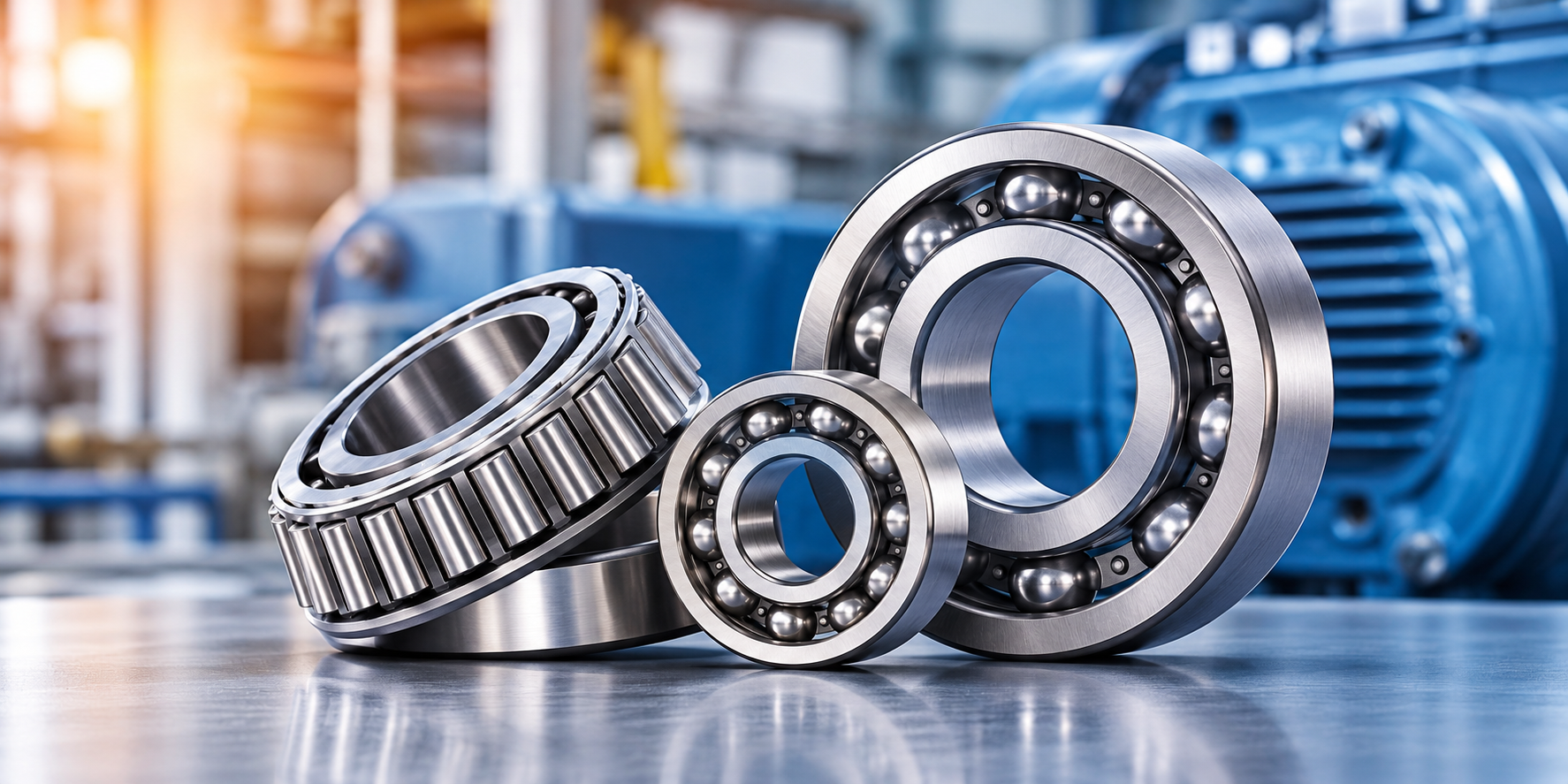
Custom bearing selection considers the direction and magnitude of the applied loads. For example, cylindrical roller bearings may be suitable for certain high radial load applications, while tapered roller bearings can support combined radial and axial loads.
Choosing an appropriate bearing type and specification helps maintain stable operation under the machine’s intended working conditions.
3. Material Selection for Specific Environments
The operating environment has a significant influence on bearing performance. Machinery used in food processing, marine equipment, chemical plants, and heavy industrial facilities may face moisture, dust, chemicals, or elevated temperatures.
Custom material selection helps address these environmental requirements. Depending on the application, options may include chrome steel, stainless steel such as SS304 or SS316, and specialised ceramic bearing materials.
Selecting a suitable material can improve resistance to environmental conditions and support dependable operation.
4. Improved Performance at Different Speeds and Temperatures
Industrial equipment operates at different speeds and temperatures. High-speed machinery may require suitable precision levels, internal clearance, cage design, and lubrication. Equipment exposed to elevated temperatures may require specialised materials, heat-resistant cages, and appropriate high-temperature lubricants.
Custom specifications allow engineers to consider these operating conditions during bearing selection.
However, the maximum permissible speed and temperature depend on the complete bearing design, lubrication, load, and installation conditions. These factors should always be evaluated together.
5. Suitable Sealing and Lubrication Arrangements
Dust, water, and other contaminants can affect bearing operation. Selecting the correct sealing or shielding arrangement helps protect internal bearing components.
For example, ZZ shielded bearings use metal shields, while 2RS sealed bearings use rubber seals. The choice depends on the level of contamination protection, friction, speed, and maintenance requirements.
Lubrication is equally important. The correct lubricant and lubrication method help reduce friction and support reliable operation.
6. Reduced Maintenance and Operational Downtime
Using bearings that match the machinery’s actual operating requirements can help reduce problems caused by incorrect dimensions, unsuitable materials, or inadequate load capacity.
When combined with proper installation, lubrication, alignment, and maintenance, appropriate bearing specifications can help reduce premature failures and unplanned equipment downtime.
This is especially valuable for continuous production facilities where unexpected machinery stoppages can affect productivity and operating costs.
Industries That Benefit from Custom Bearing Solutions
Custom bearing specifications are useful across several industrial sectors, including:
- Automotive and transportation equipment
- Textile and manufacturing machinery
- Mining and material handling equipment
- Cement and steel plants
- Food processing and packaging machinery
- Marine and shipping equipment
- Agriculture and construction machinery
- Power generation and industrial automation
Each industry has different operating conditions, making application-specific bearing selection important.
Conclusion
Custom bearing specifications play an important role in improving the compatibility, reliability, and operational suitability of industrial equipment. By considering dimensions, load requirements, materials, temperature, speed, sealing, and lubrication, OEMs and machinery manufacturers can identify bearing solutions that meet their technical requirements.
Adarsh Bearings provides industrial bearing solutions for OEMs, machinery manufacturers, and bulk buyers. Contact our team to discuss your application requirements and explore suitable standard or custom bearing specifications.