Bearings are important parts of industrial machines. They help moving parts rotate smoothly, reduce friction, and support loads during operation. However, when bearings run at high speeds, they can generate heat and experience increased friction. Proper lubrication is necessary to protect the bearing and keep the machine running smoothly.
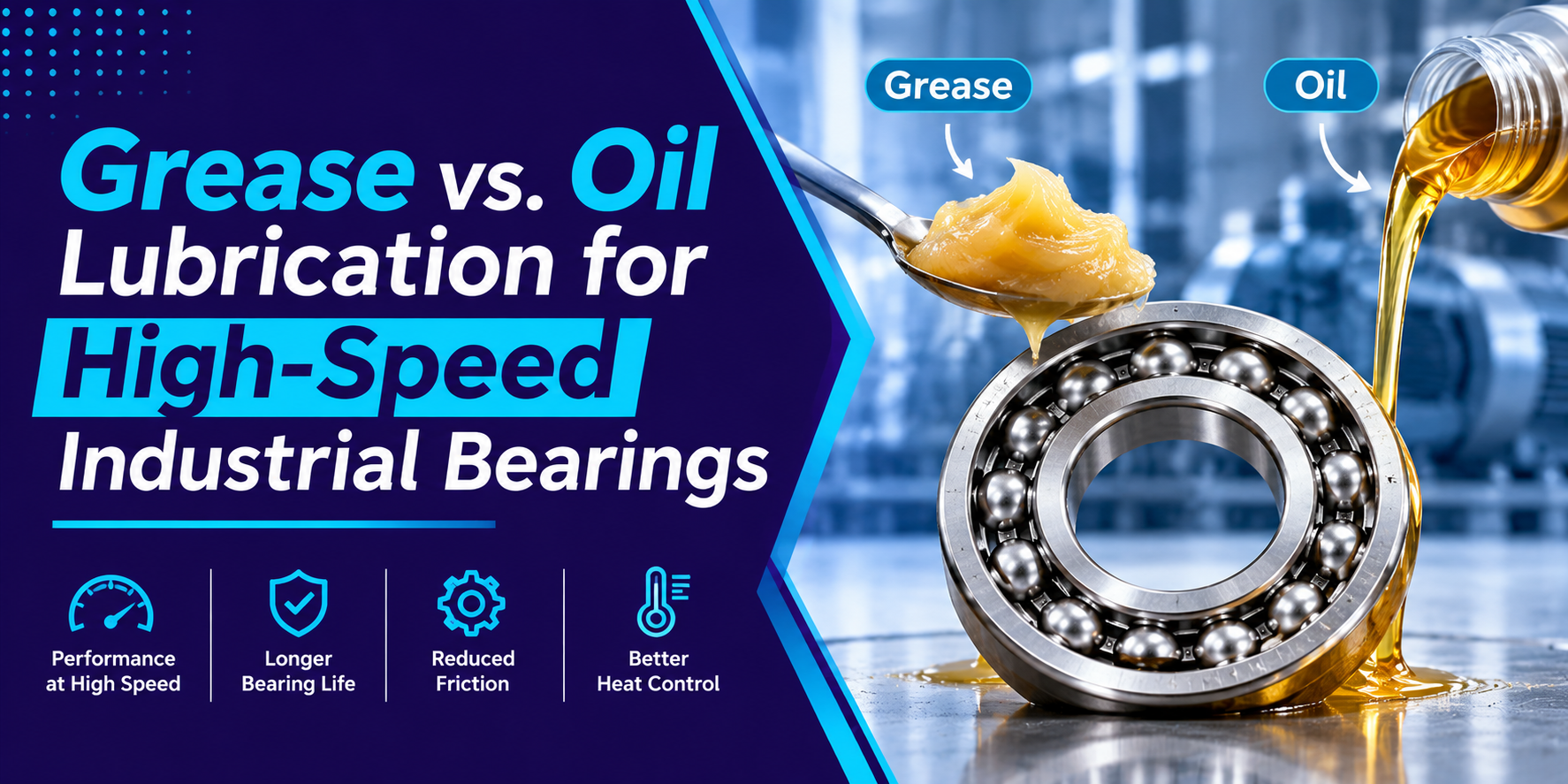
Two common lubricants used for industrial bearings are grease and oil. Both help reduce friction and wear, but they work differently. Grease stays near the bearing, while oil can flow through the bearing area and help remove heat.
Choosing the right lubricant is important for machine performance and bearing life. The wrong choice can lead to overheating, early wear, and unexpected machine breakdowns.
So, which is better for high-speed industrial bearings: grease or oil? The answer depends on the bearing type, operating speed, load, temperature, and working environment.
In this article, we will explain the difference between grease and oil lubrication and how to choose the right option for your application.
Why Is Lubrication Important for Bearings?
During operation, the rolling elements inside a bearing move along the raceways. Without proper lubrication, friction can increase and damage these surfaces over time.
Lubrication creates a protective film between moving surfaces. This helps reduce friction, control wear, and support smooth operation. It can also help protect bearing surfaces from rust and corrosion.
High-speed bearings need special attention because heat can build up quickly under certain operating conditions. If the lubricant is unsuitable or applied incorrectly, the bearing may not receive enough protection.
Proper lubrication helps reduce the risk of early bearing failure and supports reliable machine performance.
What Is Grease Lubrication?
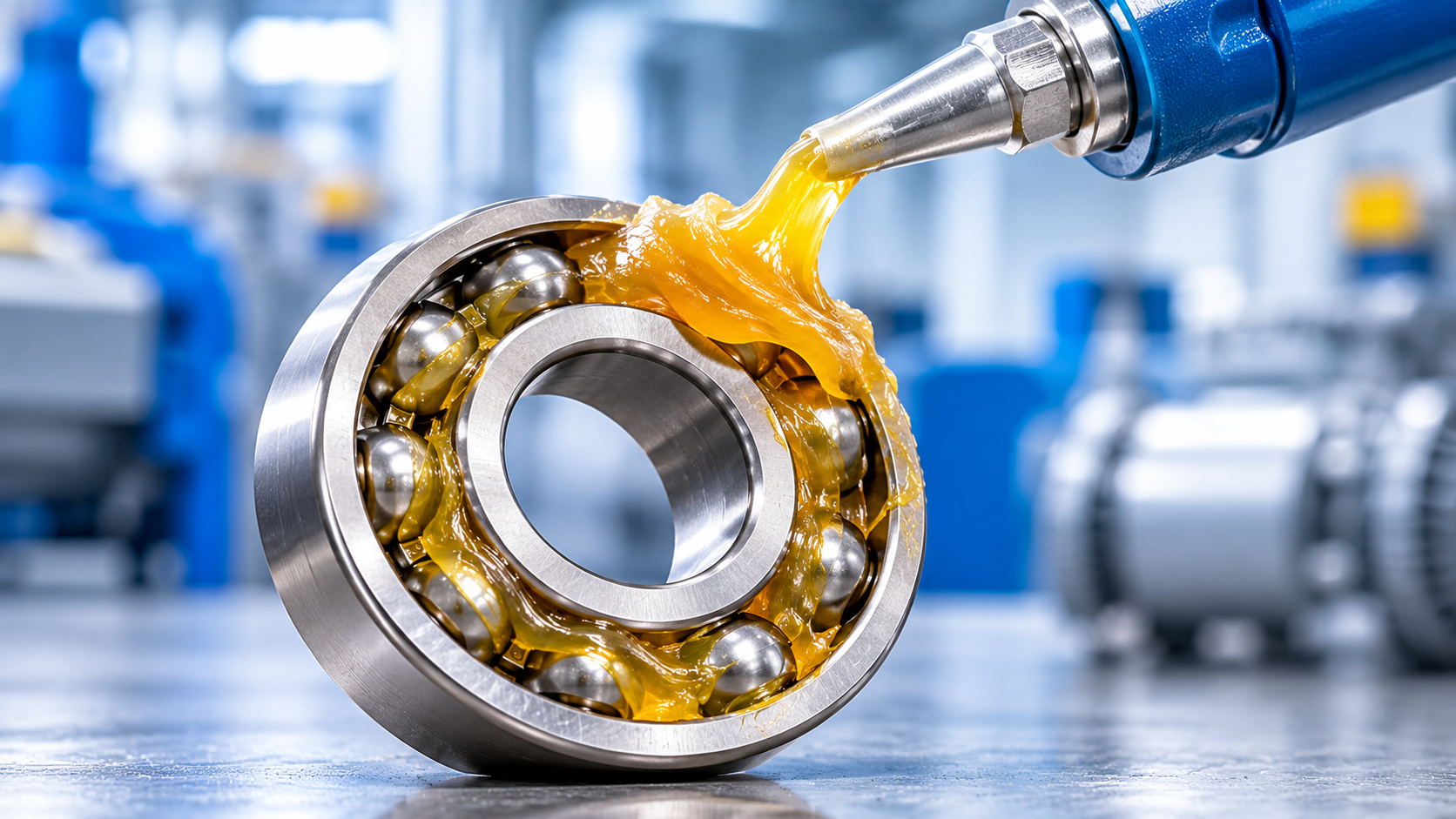
Grease is a semi-solid lubricant made from base oil, a thickener, and other additives. It stays near the bearing and releases oil to help lubricate the moving surfaces.
Grease is widely used in electric motors, fans, pumps, conveyors, and other industrial equipment.
Advantages of Grease Lubrication
- Easy maintenance: Grease lubrication often requires a simpler arrangement and may not need a separate oil circulation system.
- Good lubricant retention: Grease tends to stay near the bearing, helping maintain lubrication between service intervals.
- Protection against contamination: Grease can help keep dust and moisture away from bearing surfaces when used with suitable seals.
- Less equipment required: Many grease-lubricated bearings do not need pumps, oil reservoirs, or cooling systems.
Limitations of Grease
Grease is not suitable for every high-speed application. If the bearing is overfilled or the grease is unsuitable for the operating speed, increased friction and heat generation may occur. Grease performance also depends on its base oil viscosity, thickener type, quantity, and the bearing design.
Compared with circulating oil systems, grease generally offers less capacity for removing heat from the bearing. However, specially selected greases can perform reliably in many high-speed applications.
When should you use grease?
Grease is often suitable when simple maintenance and lubricant retention are important. It can also be used in certain high-speed bearings when the grease and bearing are specifically designed for those operating conditions.
What Is Oil Lubrication?
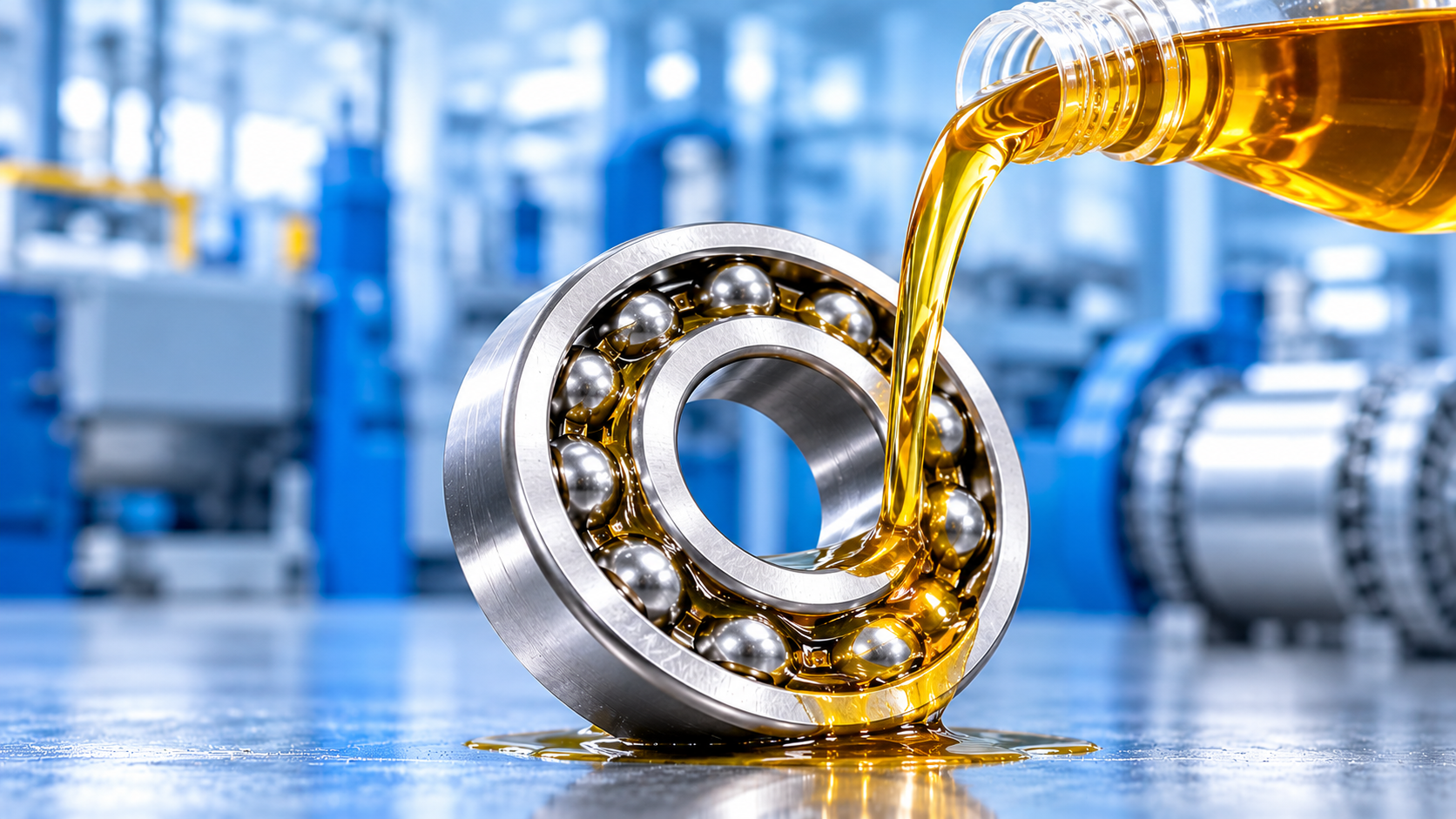
Oil lubrication is commonly used in applications where continuous lubricant supply, effective heat removal, or precise lubrication control is required. Depending on the application, oil may be supplied through an oil bath, drip-feed arrangement, oil-air system, or circulating lubrication system.
Circulating oil systems can carry heat away from the bearing and may use filters and coolers to maintain suitable operating conditions.
Advantages of Oil Lubrication
- Better heat removal: Circulating oil can carry heat away from the bearing and pass through a cooler when required.
- Suitable for demanding speeds: The right oil and supply method can support many high-speed applications.
- Easy condition monitoring: Oil samples can be checked for contamination and changes in condition.
- Continuous lubrication: Oil systems can supply lubricant continuously when the application requires it.
Limitations of Oil
Oil lubrication may require additional equipment, such as pumps, pipes, reservoirs, filters, and cooling systems. These components need regular inspection and maintenance.
Oil leaks can also create problems, and the oil level and condition must be checked regularly. Using oil with the wrong viscosity can affect lubrication and increase wear.
When should you use oil?
Oil is often preferred when a bearing operates at high speeds, generates significant heat, or needs a continuous supply of lubricant.
Grease vs. Oil: What Is the Difference?
Both lubricants protect bearings, but their performance depends on the application.
|
Factor |
Grease lubrication | Oil lubrication |
|
Lubricant retention |
Generally stays near the bearing | Flows or circulates, depending on the system |
|
Heat removal |
Usually more limited | Can be effective with suitable oil flow and cooling |
| System complexity | Often simpler |
Varies from simple oil baths to complex circulation systems |
| Maintenance | Relubrication may be required |
Oil level, condition, and supply may need monitoring |
|
High-speed suitability |
Suitable with the correct grease and bearing design |
Suitable when oil type and supply method meet operating requirements |
| Typical consideration | Correct grease type and quantity |
Correct viscosity, supply rate, and cleanliness |
The main difference is how the lubricant moves and manages heat. Grease stays near the bearing, while circulating oil can remove heat more effectively.
However, neither option is always better. The correct choice depends on the bearing specifications and operating conditions.
How to Choose the Right Lubricant for High-Speed Bearings
Before selecting grease or oil, businesses should consider a few important factors.
1. Operating Speed
Bearing speed affects friction, temperature, and lubricant performance. Oil lubrication may be suitable for applications requiring effective heat removal, while specially designed grease can also support high-speed operation. Always consider the bearing’s speed limits, lubricant specifications, and manufacturer’s recommendations.
2. Operating Temperature
The lubricant must work properly within the bearing’s temperature range. If the bearing runs hot, oil circulation may help remove excess heat. Grease can also work at higher temperatures when the correct type is selected.
3. Load Requirements
The bearing must support the load applied by the machine. Heavy loads may require a lubricant with suitable viscosity and protective properties. Both speed and load should be considered when choosing a lubricant.
4. Working Environment
Dust, dirt, moisture, and other contaminants can affect bearing performance. Grease can help provide a barrier against contaminants when used with suitable sealing arrangements. Oil lubrication systems may require appropriate seals and filtration to maintain lubricant cleanliness. The choice should depend on the operating environment and the level of protection required.
5. Maintenance Requirements
Grease may be a practical choice when a simpler lubrication system is preferred. Oil may be more suitable when continuous lubrication, cooling, and regular oil monitoring are required.
Always follow the bearing manufacturer’s recommendations before changing the lubrication method.
Common Lubrication Mistakes to Avoid
Even a suitable lubricant can cause problems when it is used incorrectly. A few common mistakes include:
- Using too much grease: Excess grease can increase friction and temperature in high-speed bearings.
- Choosing the wrong oil viscosity: Oil that is too thick or too thin may not provide the required lubrication.
- Ignoring temperature changes: A sudden rise in temperature may indicate a lubrication or mechanical problem.
- Mixing different greases: Some grease types are not compatible with each other.
- Skipping maintenance: Lubricant condition, seals, and oil levels should be checked regularly.
Avoiding these mistakes helps protect bearings and reduces the risk of early failure.
How Can Proper Lubrication Improve Bearing Life?
Proper lubrication helps reduce friction, control heat, and protect the bearing’s internal surfaces. Businesses can improve bearing performance by following a few simple practices:
- Use the lubricant recommended for the application.
- Follow the correct lubrication quantity and schedule.
- Keep lubricants clean and prevent contamination.
- Monitor bearing temperature, noise, and vibration.
- Check seals and lubrication equipment regularly.
- Inspect the bearing when its performance changes unexpectedly.
These practices help identify problems early and reduce unnecessary maintenance costs.
Choosing the Right Bearings with Adarsh Bearings
Selecting the right bearing is important for reliable industrial machine operation. However, bearing selection and lubrication should always be considered together.
Adarsh Bearings Private Limited offers a range of bearing products for industrial applications, including ball bearings, deep groove ball bearings, angular contact bearings, cylindrical roller bearings, tapered roller bearings, spherical roller bearings, needle roller bearings, and thrust bearings.
When selecting bearings for high-speed applications, businesses should check the product specifications, operating requirements, and recommended lubrication method. Choosing a suitable bearing and maintaining it correctly can help reduce wear and support smooth machine operation.
For industrial bearing requirements, contact Adarsh Bearings to discuss your application and explore suitable bearing options.
Conclusion
Grease and oil both help protect industrial bearings, but they serve different needs. Grease is often suitable when simple maintenance and good lubricant retention are important. Oil is often preferred for high-speed applications that require effective heat removal and a continuous supply of lubricant.
The right choice depends on the bearing type, speed, load, temperature, and working environment. Using the wrong lubricant or applying it incorrectly can lead to overheating, wear, and early bearing failure.
By following the manufacturer’s recommendations and maintaining the lubrication system properly, businesses can improve bearing performance, reduce downtime, and avoid unnecessary replacement costs.