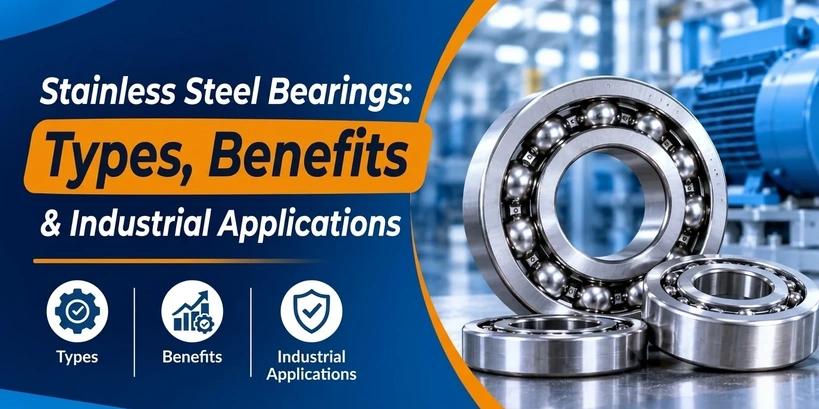
Stainless steel bearings are important components in industrial machinery where corrosion resistance, durability, and reliable performance are essential. Unlike conventional chrome steel bearings, stainless steel bearings offer better resistance to moisture, humidity, and certain corrosive environments. This makes them suitable for industries that operate in challenging conditions or require high standards of cleanliness.
From food processing and pharmaceutical equipment to marine applications and chemical processing machinery, stainless steel bearings help support smooth rotation and dependable machine operation.
What Are Stainless Steel Bearings?
Stainless steel bearings are mechanical components manufactured using stainless steel materials. They are designed to support rotating or moving machine parts while reducing friction and handling operational loads.
Common stainless steel grades used in bearing applications include SS304 and SS316, depending on the required corrosion resistance and operating environment. The selection of material depends on factors such as exposure to moisture, chemicals, temperature, load, and operating speed.
Stainless steel bearings are available in different designs and configurations to meet the requirements of various industrial applications.
Types of Stainless Steel Bearings
Different types of stainless steel bearings are used depending on the machinery design, load direction, speed, and operating conditions.
1. Stainless Steel Ball Bearings
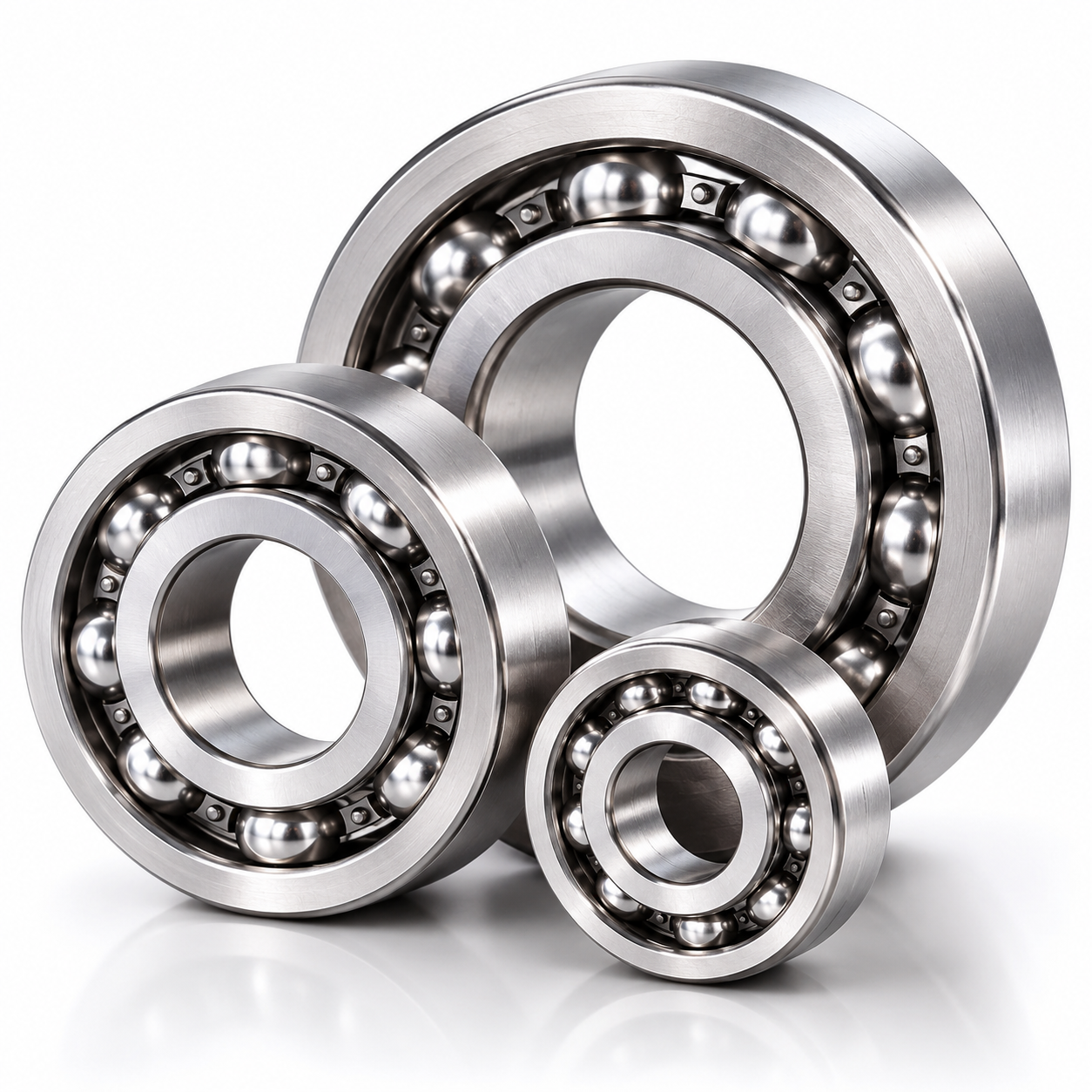
Ball bearings are widely used in applications requiring smooth rotation and reduced friction. They can support radial loads and, depending on their design, axial loads. They are commonly found in pumps, electric motors, food processing equipment, and packaging machinery.
2. Stainless Steel Deep Groove Ball Bearings
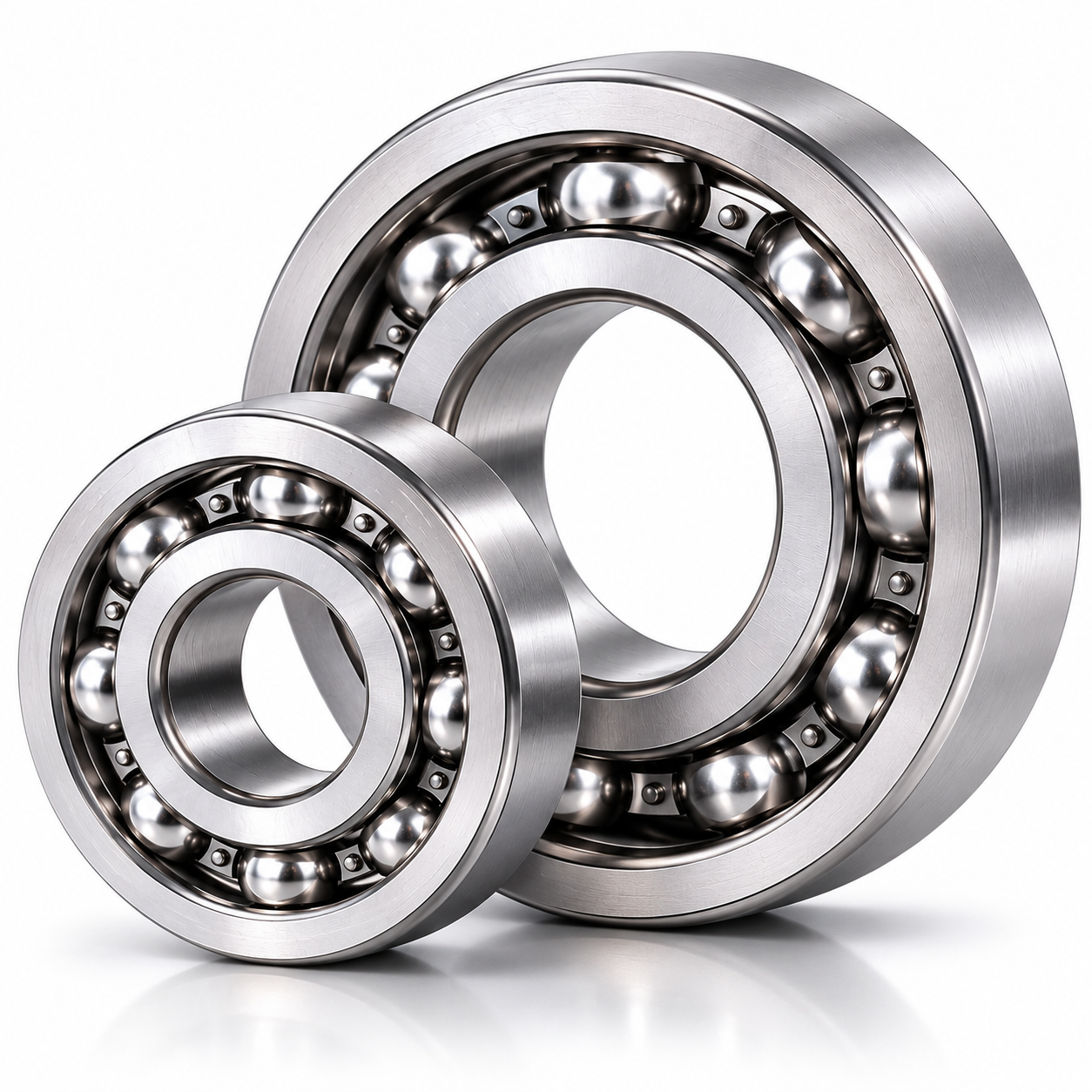
Deep groove ball bearings are among the most commonly used bearing types. Their design allows them to handle primarily radial loads along with moderate axial loads in both directions. Stainless steel versions are suitable for equipment exposed to moisture and frequent cleaning.
3. Stainless Steel Roller Bearings
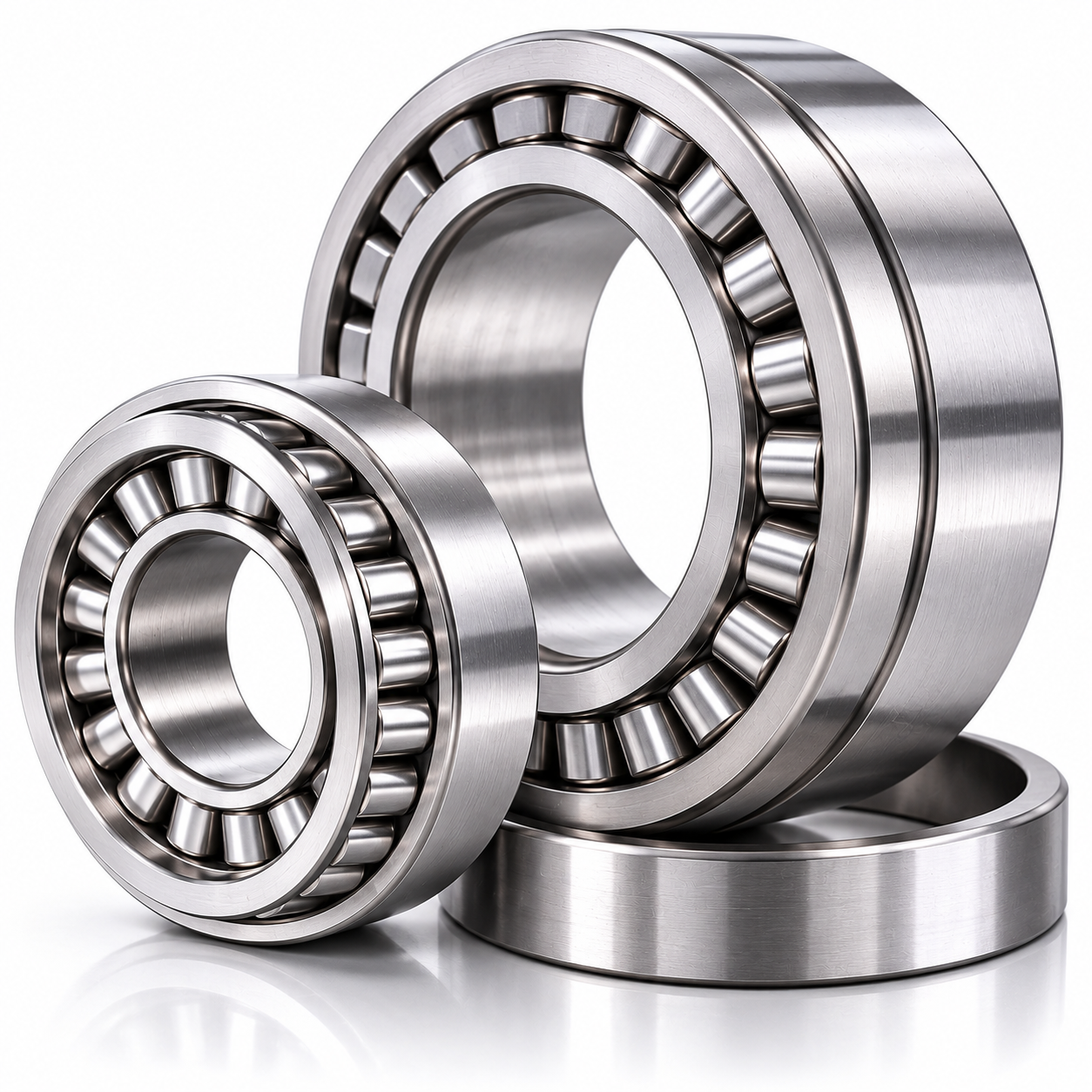
Roller bearings use cylindrical, tapered, spherical, or other roller elements to support loads. Depending on their design, they can handle higher radial or combined loads and are used in industrial machinery, conveyors, and heavy-duty equipment.
4. Stainless Steel Thrust Bearings
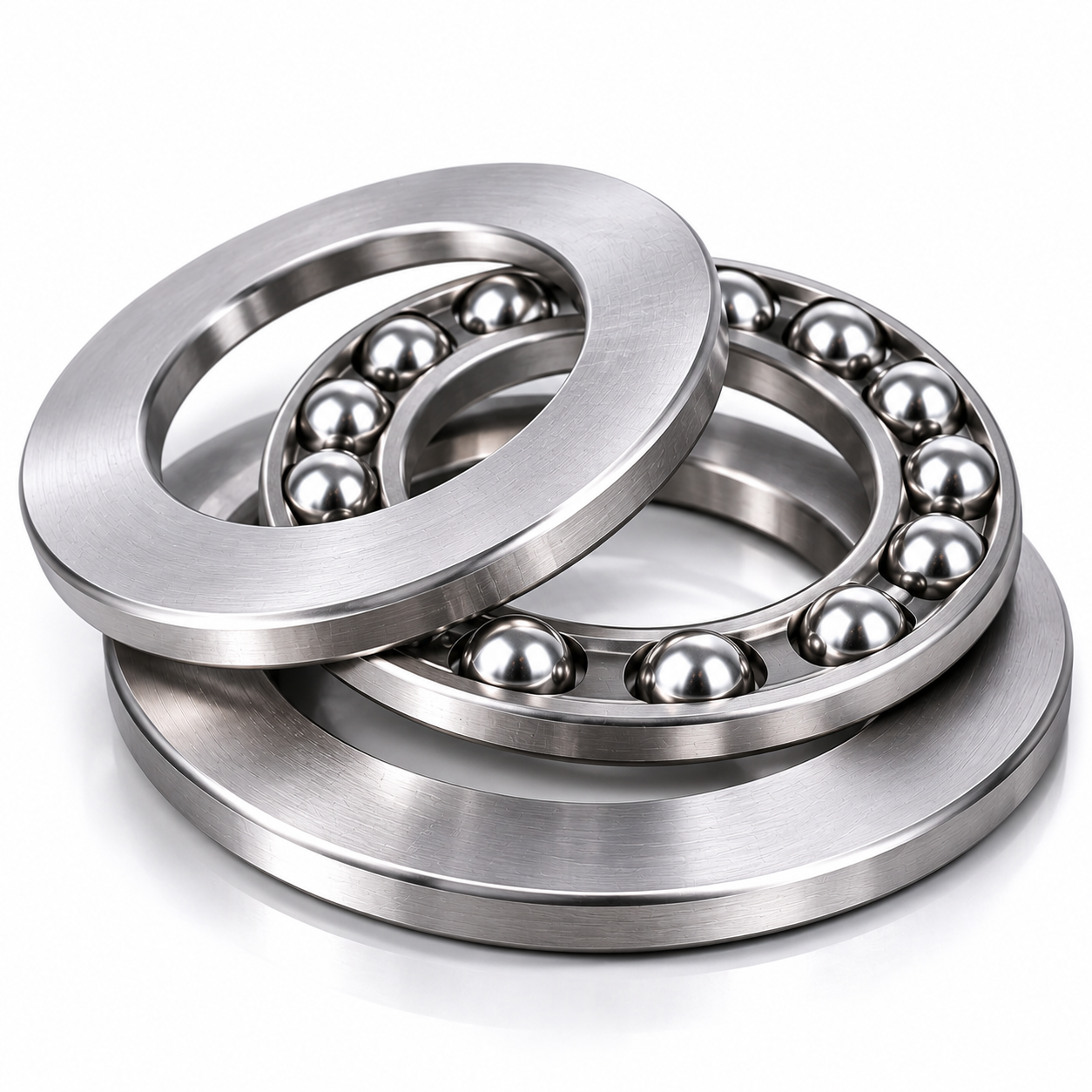
Thrust bearings are designed to support axial loads acting along the shaft. They are used in machinery where axial force management is important, including certain pumps, gear systems, and industrial assemblies.
Benefits of Stainless Steel Bearings
Stainless steel bearings offer several advantages for industrial applications.
Corrosion Resistance: Stainless steel provides resistance to rust and corrosion in many environments involving moisture, humidity, and selected chemicals. The actual resistance depends on the steel grade and operating conditions.
Longer Service Life: When correctly selected, installed, lubricated, and maintained, stainless steel bearings can provide dependable service and help reduce premature component replacement.
Suitable for Hygienic Environments: Their corrosion-resistant properties make them useful in food processing, beverage production, and pharmaceutical machinery, where equipment may undergo regular cleaning.
Reliable Performance: Stainless steel bearings support smooth machine operation and help reduce friction when used within their specified load, speed, and lubrication limits.
Versatile Applications: They are available in different bearing types, sizes, and configurations, making them suitable for a wide range of industrial equipment.
Industrial Applications of Stainless Steel Bearings
Stainless steel bearings are used across industries where conventional bearing materials may not provide the required corrosion resistance.
- Food and Beverage Processing: Used in mixers, filling machines, conveyors, and packaging equipment.
- Pharmaceutical Industry: Suitable for selected processing and packaging machinery that requires corrosion-resistant components.
- Marine Industry: Used in equipment exposed to humid and saltwater environments, with appropriate material selection and maintenance.
- Chemical Processing: Applied in machinery operating around selected chemicals and corrosive substances.
- Agricultural Equipment: Used in machinery exposed to moisture, dust, and outdoor operating conditions.
- Packaging and Automation: Support rotating components in automated production and packaging systems.
How to Choose the Right Stainless Steel Bearing
Selecting the correct stainless steel bearing requires evaluating the operating conditions and technical requirements of the machinery. Important factors include bearing size, load capacity, operating speed, temperature, lubrication, sealing arrangement, and exposure to water or chemicals.
Material grade is also important. SS304 and SS316 offer different levels of corrosion resistance, and the correct choice depends on the application. Buyers should also consider whether sealed or shielded configurations are required.
Working with an experienced bearing supplier can help businesses identify suitable bearing specifications for their equipment.
Conclusion
Stainless steel bearings are valuable solutions for industrial applications that demand corrosion resistance, reliable operation, and durability. With different bearing types and material options available, businesses can select suitable components for food processing, pharmaceutical, marine, chemical, and general manufacturing applications.
Adarsh Bearings offers industrial bearing solutions for different machinery and application requirements. Contact our team to discuss your stainless steel bearing requirements, specifications, and bulk supply needs.