
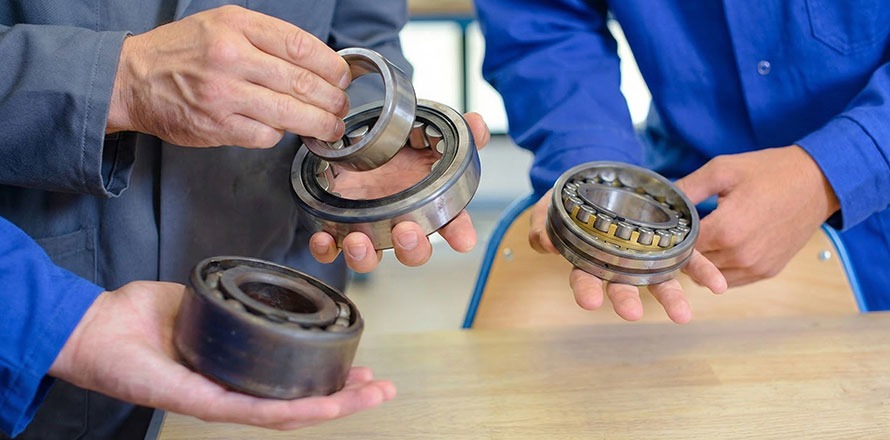
Why Choosing the Right Bearing Matters
Selecting the correct bearing is one of the most critical engineering decisions in industrial machinery design. A bearing may appear to be a small mechanical component, but it plays a vital role in ensuring smooth rotational movement, minimizing friction, and supporting loads within mechanical systems.
When the wrong bearing is used in machinery, the consequences can be costly. Premature bearing failure can lead to unexpected equipment downtime, production losses, increased maintenance expenses, and even safety risks in high-load industrial environments. For OEM manufacturers and machine designers, choosing the right bearing during the design phase is essential for ensuring durability, reliability, and long service life.
This guide explains the key parameters engineers must evaluate during industrial bearing selection. By understanding load conditions, operating speeds, environmental factors, and expected bearing life, manufacturers can select the most suitable OEM machinery bearings and significantly reduce the risk of mechanical failure.
Analyze the Load Requirements
The first and most important factor in selecting a bearing is understanding the type and magnitude of loads applied to the shaft.
Radial Loads
Radial loads act perpendicular to the shaft axis. These loads are commonly found in electric motors, conveyor systems, pumps, and gearboxes.
Bearings typically used for radial loads include:
- Cylindrical roller bearings
- Deep groove ball bearings
These bearings are designed to handle significant radial forces while maintaining stable rotational performance. Cylindrical roller bearings, in particular, are ideal for heavy-duty machinery that requires high load capacity.
For example, industries using industrial motors and heavy equipment often rely on solutions like Cylindrical Roller Bearings because of their ability to handle large radial loads efficiently.
Axial (Thrust) Loads
Axial loads, also known as thrust loads, act parallel to the shaft axis. These loads are common in applications such as automotive transmissions, machine tool spindles, and vertical shafts.
Bearings designed for thrust loads include:
- Ball thrust bearings
- Roller thrust bearings
These bearings are specifically engineered to support axial forces while maintaining precise shaft alignment. When machinery experiences high axial stress, solutions like Thrust Bearings are commonly used.
Combined Loads
Many industrial machines experience both radial and axial loads simultaneously. In such situations, engineers must select bearings capable of supporting combined load conditions.
Common choices include:
- Tapered roller bearings
- Angular contact ball bearings
These bearings distribute loads across multiple contact points, allowing them to manage both force directions efficiently. Heavy industrial equipment and automotive hubs frequently use Tapered Roller Bearings for this reason.
Determine Operating Speeds
Another crucial factor in bearing selection is the rotational speed of the application.
High-speed operations generate friction, which produces heat inside the bearing assembly. Excessive heat can degrade lubrication, increase wear, and eventually lead to bearing failure.
Speed Limits and Bearing Types
Different bearing designs have varying speed capabilities.
Generally:
- Ball bearings perform better in high-speed applications due to lower friction.
- Roller bearings are typically better suited for heavy loads but may operate at lower speeds.
For example, machinery such as electric motors, pumps, and fans often use Industrial Ball Bearings because they provide smoother performance at higher RPM levels.
Cage Design and Materials
The cage (or retainer) inside a bearing separates rolling elements and helps maintain proper spacing.
Different cage materials influence performance:
- Steel cages offer durability
- Brass cages handle heavy loads
- Polymer cages reduce friction in high-speed systems
Selecting the right cage design ensures stable operation even under demanding rotational speeds.
Evaluate the Operating Environment
Industrial environments vary widely, and bearings must be capable of performing under specific conditions.
Extreme Temperatures
Industries such as steel plants, cement manufacturing, and power generation often operate at very high temperatures.
In these cases, bearings must be made from materials that can withstand thermal expansion and maintain structural stability.
High-temperature lubricants and special heat-treated components are often required.
Corrosion and Moisture
Industries such as food processing, marine equipment, and chemical manufacturing expose bearings to moisture and corrosive substances.
To prevent corrosion and maintain hygiene standards, stainless steel bearings are often recommended. Materials like SS304 and SS316 provide excellent resistance to corrosion while maintaining durability.
Dust and Contaminants
Mining, agriculture, and construction equipment frequently operate in environments with high levels of dust and debris.
To protect bearings from contamination, sealed bearing designs are used:
- Rubber sealed (2RS) bearings prevent dust entry
- Metal shielded (ZZ) bearings provide moderate protection while maintaining speed efficiency
Proper sealing helps significantly with bearing failure prevention in harsh industrial environments.
Calculate Required Bearing Life (L10 Life)
Engineers use a standard calculation known as L10 life to estimate how long a bearing will operate before fatigue failure occurs.
The L10 life represents the number of operating hours or revolutions that 90% of bearings in a group are expected to achieve before failure.
This calculation considers factors such as:
- Load magnitude
- Rotational speed
- Material strength
- Lubrication conditions
For heavy machinery or continuous production systems, engineers usually include a safety margin to ensure longer operational life.
Accurate life calculations are particularly important in industries like mining, energy production, and automation systems where equipment downtime is extremely costly.
Consider Shaft Misalignment and Rigidity
In many industrial machines, shafts may experience slight deflection under heavy loads or due to structural design limitations.
Misalignment can cause uneven stress distribution inside the bearing, leading to premature failure.
Bearings Designed for Misalignment
Certain bearing designs can automatically adjust to misalignment conditions.
One of the most effective solutions is the Spherical Roller Bearings design. These bearings allow the shaft to tilt slightly without affecting load capacity or performance.
They are commonly used in:
- Mining equipment
- Crushers
- Conveyor systems
- Heavy industrial machinery
Lubrication and Maintenance Strategies
Proper lubrication is essential for reducing friction, controlling temperature, and preventing wear inside bearings.
Grease Lubrication
Grease lubrication is the most common solution for industrial bearings because it:
- Requires minimal maintenance
- Helps seal contaminants
- Provides long service intervals
Grease-lubricated bearings are widely used in electric motors and general machinery.
Oil Lubrication
Oil lubrication is preferred in high-speed or high-temperature applications because it offers better cooling properties.
This method is often used in gearboxes, turbines, and large industrial equipment.
Maintenance-Free Bearings
In applications where relubrication is difficult or impossible, manufacturers often specify sealed-for-life bearings. These bearings are pre-lubricated and sealed during manufacturing, eliminating the need for periodic maintenance.
Conclusion: The Value of the Right Bearing Partner
Selecting the correct bearing for industrial machinery involves evaluating several critical factors including load type, operating speed, environmental conditions, expected service life, and lubrication requirements.
By carefully analyzing these parameters during the design stage, OEM manufacturers can significantly improve machine reliability and reduce maintenance costs.
Companies like Adarsh Bearings Private Limited work closely with manufacturers and engineering teams to provide high-performance bearing solutions tailored to specific applications. With expertise in materials, sealing options, load capacity optimization, and bulk supply capabilities, the company supports industries that depend on reliable mechanical performance.
Need help selecting the right bearing for your next machine design or industrial application?
Contact the Adarsh Bearings engineering team today to discuss your requirements or request a quote for OEM and bulk bearing supply.