
Adarsh Cylindrical Roller Bearings
Spherical roller bearings are also commonly known as ball bearings or cylindrical rollers because of their cylindrical shape. The inner and outer rings help guide these balls along their respective raceways for smooth movement within them. This prevents friction between surfaces that would otherwise cause interference with each other or cause damage to one or both parts if they come into contact with each other during operation such as when operating heavy machinery.
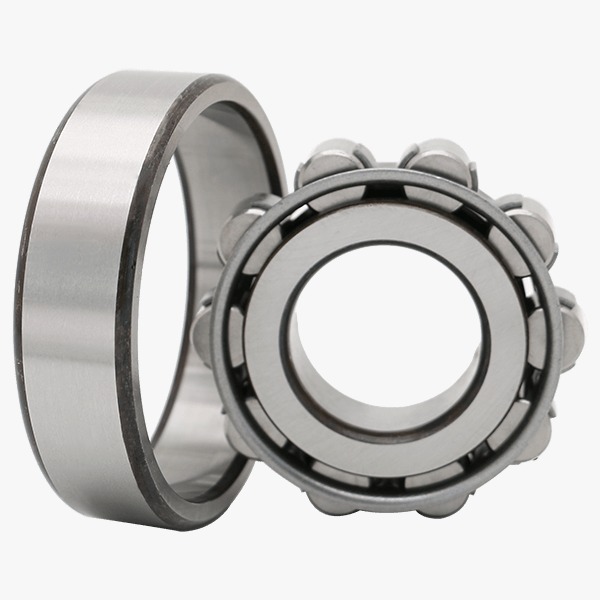
Cylindrical Roller Bearings Design
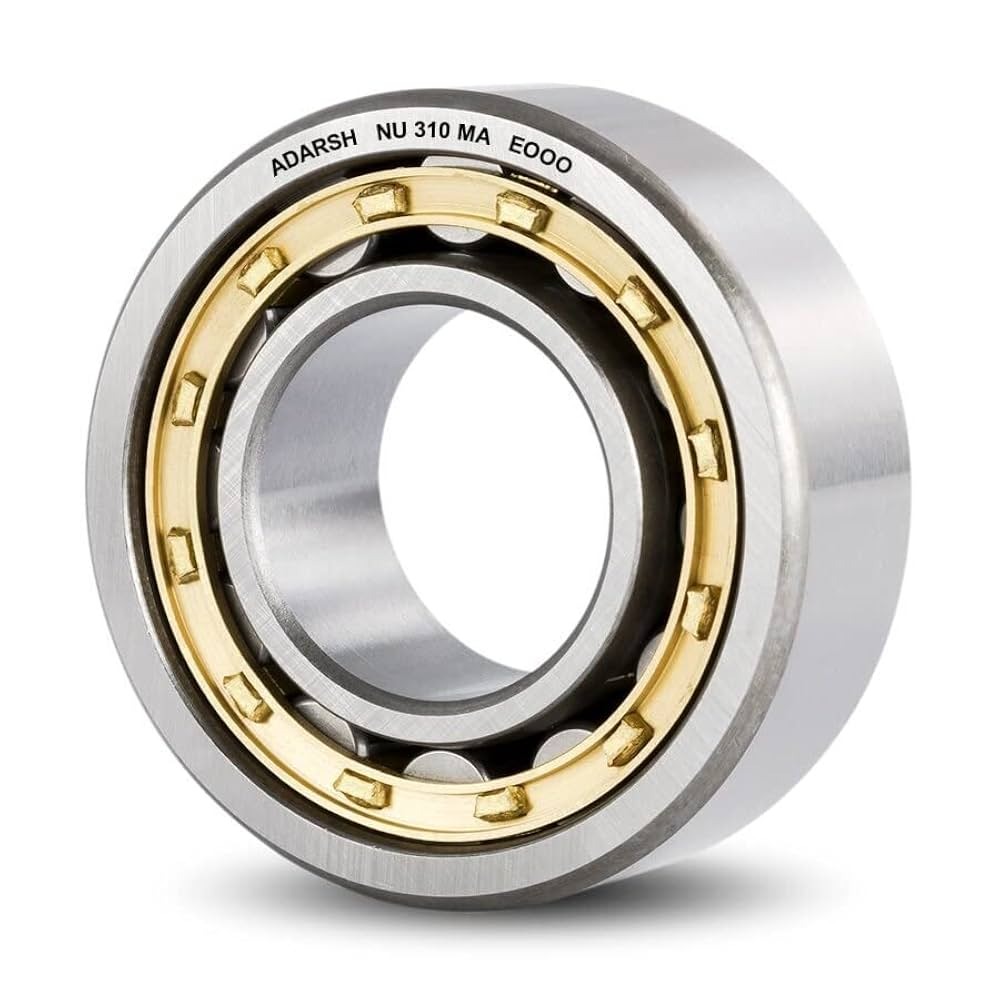
The inner and outer rings of the cylindrical roller bearings are separated by a series of cylinders that serve to sustain both rings as well as lessen the overall frictional load. Depending on the version you’re using, these cylinders are supported by a rib or cage attached to either an inner or outer ring.
The number of cylinders or rollers employed in a cylindrical roller bearing, on the other hand, may vary, and increasing this number will result in an increase in total performance for obvious reasons.
Cylindrical Roller Bearings are made to hold heavy radial loads, they are usually used in applications like conveyor belt rollers, etc. In this case, the bearing has a roller that is cylinder hence the point of contact is a line. This helps to spread the load over the larger area that allows the bearing to handle greater loads in comparison to a ball bearing. Cylindrical bearings are made with the single row, two rows or multi-rows of rolling elements that help to meet an application’s radial load requirement.
Cylindrical Roller Bearing Specifications
- Static radial load and axial load:- These are the maximum radial and axial loads, respectively, a bearing may resist without enduring deformation.
- Bores:- In case of bore size 4 or more, to know the diameter of the bore in mm, you need to multiply the size of the bore by 5.
- Dynamic radial load & axial load:- These are the final radial and axial loads within which the identical bearing group having its outer rings fixed, may withstand a rating life of 1 million inner ring revolutions.
- Grades:- To lessen stress concentrations, these rollers are capped or end-relieved. Due to the minimal friction created by this design, high-speed applications are possible. It is usual to find cylindrical roller bearings in precision grades like RBEC-5, according to the Roller Bearing Engineers Committee (RBEC).
- Ratings:- The accuracy and tolerance range for various types of bearings are described by RBEC ratings. The bearing tolerances are often tighter the higher the RBEC number. Typically, oil that also acts as a coolant is used to lubricate cylindrical roller bearings.
Applications Of Cylindrical Roller Bearings
Types of Cylindrical Roller Bearings
Single-Row Cylindrical Roller Bearing
Bearings that can be separated are single-row cylindrical roller bearings. Two flanges of the bearing ring serve as guides for the rolling element. The inner ring, outer ring, rolling element, and cage make up the majority of single-row cylindrical roller bearings.
Double-Row Cylindrical Roller Bearing
Double-row cylindrical roller bearings can be separated and are simple to put together and take apart. Such bearings can handle strong radial stresses because to its second row of rollers. Two different structural variants are available for double row cylindrical roller bearings: cylindrical and tapered bores.
Four-Row Cylindrical Roller Bearing
Four-row cylindrical roller bearings are typically utilized as main roll bearings on metallurgical equipment. It is the most commonly used rolling mill bearing due to its compact construction, superior rigidity, and high bearing capacity. The axial load cannot be supported by this kind of bearing. Consequently, in order to withstand an axial load, it must be used in conjunction with a thrust bearing.
Full Complement Cylindrical Roller Bearing
The full complement cylindrical roller bearings offer a higher bearing capacity since the ring raceways are packed with rollers and lack a cage. There will also be some relative slippage between the rollers because this sort of bearing lacks a cage to separate and guide the rollers. Therefore, when compared to standard cylindrical roller bearings, their operating speed is slower and their noise level is higher.
Benefits of Cylindrical Roller Bearings
- In comparison to a ball bearing, it has a stronger resilience to wear and stress.
- Its distinctive shape makes mounting and demounting easy.
- It is made to withstand a combined thrust load and the radial load of the N and NU types (NJ and NUP type).
- Outstanding performance and endurance even in demanding circumstances.