
Adarsh Thrust Bearings
An axial load is supported by a thrust bearing, it is a form of rotary bearing that rotates between parts to reduce friction (mostly in low-speed applications). The axial bearing is what allows pieces to rotate with one another. Rolling components in thrust bearings are typically used to support the axial loads of rotating objects.
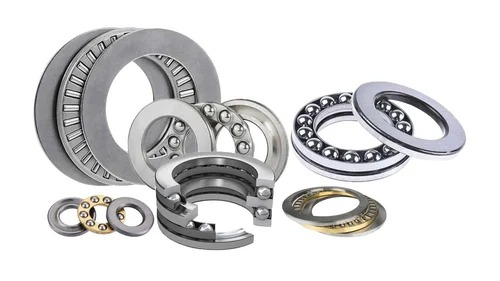
Thrust Bearings Design
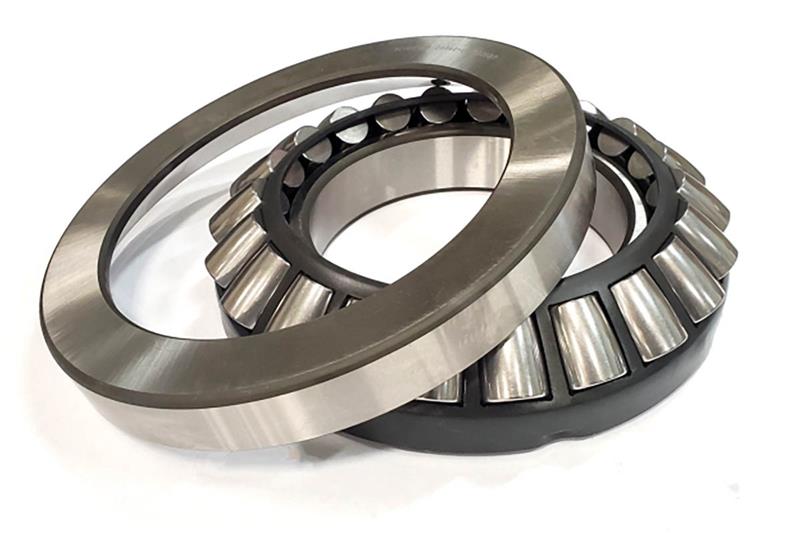
There are numerous bearing designs that can be used in thrust settings. While most thrust bearings have raceways cut into the faces of mated rings, radial-load ball bearings have a roller race at the opposite outer and inner bearing rings. This configuration provides some support for radial loads but little to no support for loads that are parallel to the bearing axis. Additionally, thrust ball bearings are incapable of supporting moment loads.
The most typical rolling elements utilised for thrust applications include balls, tapered rollers, cylindrical rollers, needle rollers, and spherical rollers.
Thrust bearings are a type of rotary bearings, they allow rotation between the parts and are so designed to support high axial load while being parallel to the shaft. Different thrust bearings are used for supporting different amounts of axial loads.
The ball thrust series can relatively handle lighter loads while the Angular contact series can handle the load from both radial and thrust loads in both directions. There are several designs and configurations available in thrust bearings depending on the industry type and applications for they are used.
Types of Thrust Bearings are: Ball Thrust bearings, Ball Angular contact, Double Acting Angular Contact, Cylindrical Roller, Crane Hook Cylindrical Roller, Light Duty Double Acting Cylindrical, and Center Plate Double Acting Cylindrical, Spool type Double Acting Cylindrical, Tapered Roller, V-Flat Tapered Roller, Double Acting V-Flat Tapered Roller, and Screwdown Thrust Tapered Roller.
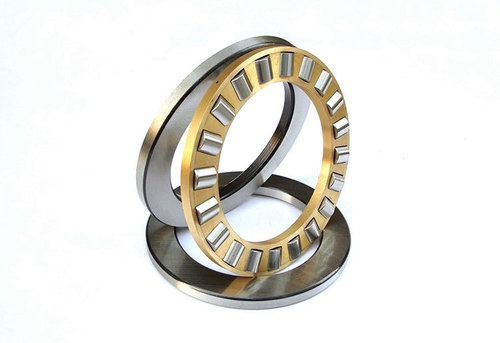
Thrust Bearings Specifications
Shaft Washer Diameter
The diameter of a shaft washer is measured across the borehole, which serves as the shaft’s contact. This is equivalent to a non-thrust bearing’s inner diameter.
Housing Washer Diameter
The component’s housing washer diameter, which is carved with a raceway for rolling elements, is measured in a straight line between antipodal locations.
Width
The width of a bearing can also be thought of as its “height” because it is the distance across the side of the bearing that is parallel to the shaft axis.
Types Of Thrust Bearings
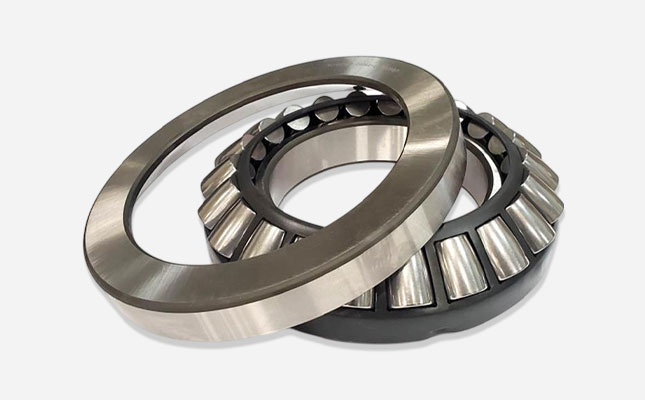
Spherical Roller Thrust Bearing
Spherical Roller Thrust Bearing
The raceways closely mimic the cone-and-cup structure found in typically tapered roller bearings, while the rolling components are fashioned like barrels with curved surfaces for load distribution. As a result, the bearing has the ability to self-align, which is advantageous in applications where shock loads or shaft deflection may be present.
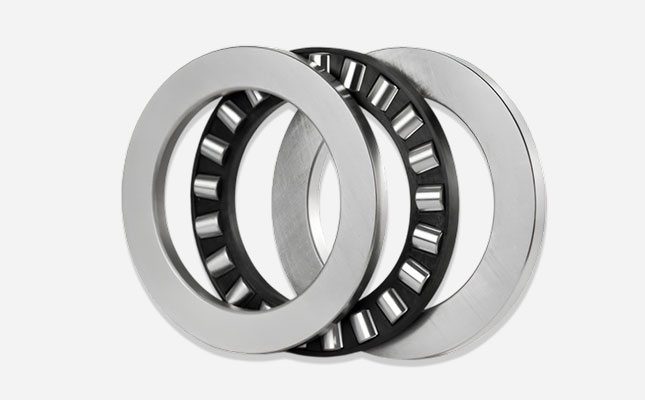
Cylindrical Roller Thrust Bearings
Cylindrical Roller Thrust Bearings
This kind of bearings circulates the rollers in a vertical, radial pattern around the bearing axis. To lessen the tension between the rollers and the outside wall of the house washer raceway, these rollers must be capped or end-relieved to reduce friction, prevent wear, and enhance operational efficiency during high-speed rotation.
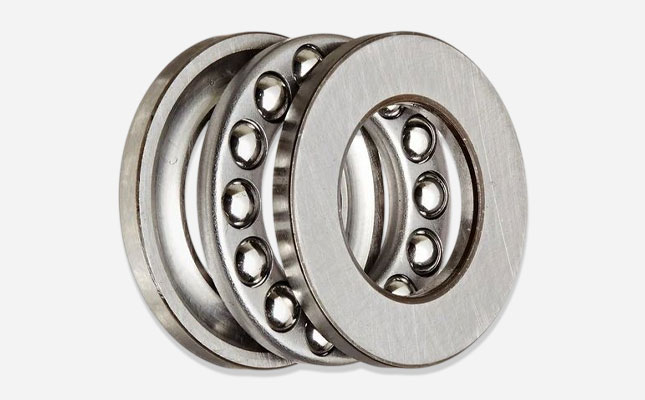
Thrust Ball Bearing
Thrust Ball Bearing
Radial loading cannot be transmitted by thrust ball bearings. This type is prone to misalignment, so producers often add a sphered groove to the housing washer to lessen the likelihood. Although they operate well in high-speed applications, they struggle under huge loads and are generally suited for light-duty machinery requiring precise axial load handling.
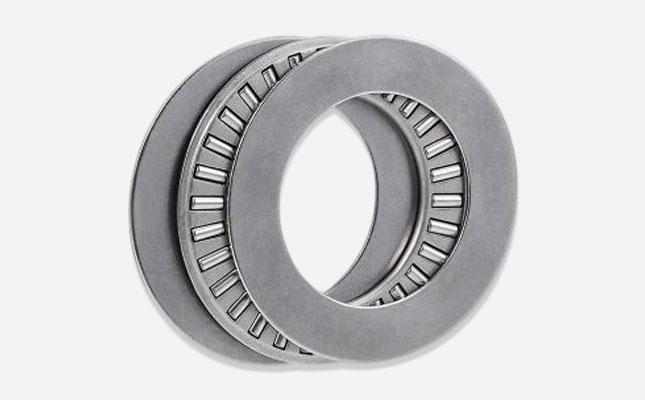
Needle Roller Thrust Bearing
Needle Roller Thrust Bearing
Thrust bearings with needle rollers are prized for their low height and a substantial number of rolling elements. As a result, they are sometimes used without a shaft washer or housing washer; instead, when appropriate, the rolling elements make direct contact with the rotating parts. These have zero radial load capacity but very high axial and shock loads.
Applications Of Thrust Bearings
Benefits Of Thrust Bearings
- Thrust ball bearings are a crucial component in a variety of applications due to their high capacity for load.
- These are simple to mount and remove different variations to meet different demands
- Thrust Bearings are really dependable, easily available, and resist hostile situations.